What Is the Difference Between Swing Gates And Sliding Gates?

When it comes to choosing the right gate for your property, one of the first decisions is whether to go for sliding gates or swing gates. It can feel a bit like choosing between a cup of coffee or tea in the morning. Both may be excellent in their own way, but does one suit your needs that little bit more? At PQF Assured, we are no stranger to the two; we regularly install both sliding and automatic swing gate system, across Kent and beyond, for all sorts of scenarios. There are valid differences between the two - sliding and swing gates - and this blog post is going to explain them all.
At a glance: Gate operations explained
Both sliding and swing gates can be fabricated as automatic gate systems that work to improve security, convenience, and curb appeal for any location they are installed. When designed to a bespoke specification, they can also be made to perfectly suit the aesthetics of your home or business. Here’s an overview of what exactly we mean by swing gates and sliding gates:
Swing Gates: these are gates that pivot open on hinges, Much like a traditional garden gate, but scaled up to the size needed, able to fit vehicles as well as people for example.
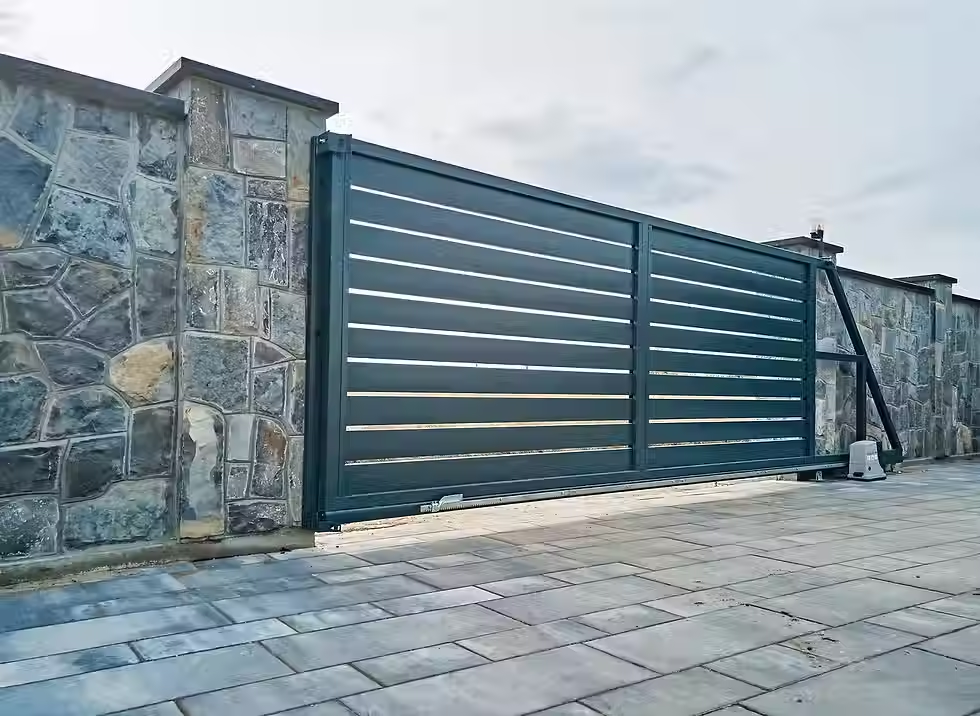
Sliding Gates: these move laterally, sliding past one side of the driveway opening. They are often powered electronically as they are difficult to open manually. They can also work on a cantilevered mechanism for smooth, reliable motion.
Space and site considerations
Looks aside, the first thing to consider is the space in which the gate will sit, as this can greatly impact the type of gates that will work for you. For swing gates and sliding gates, how they behave once installed could limit your choices. Let’s be clear: space really matters when it comes to gate design, for several reasons, not least safety regulations.
With sliding gates, you need ample room to the side of the opening for the gate to retract into. This could be hidden or built in, but the space still needs to exist. The length of this is typically the width of the entire gate, plus an additional portion for effective (and safe!) movement.
In contrast, with swing gates, the depth is more important than the width. Swing gates need room in front of and behind the opening for the arcs as they open and close. In tight spaces, this could be reduced to just one side.
For properties where driveway space is limited, or awkwardly shaped, sliding gates can be a clever solution that also stops things from becoming cluttered. In wide open spaces, a swing gate can suit your setting beautifully.

Installation practicalities: Swing gate installations vs sliding gates
Both swing and sliding gates come with their own installation considerations, some of which may be so demanding that they decide your final choice for you.
A swing gate installation tends to be simpler. These gates are made of robust materials and a simple design, with hinges that are less technically demanding to install, even with a motor system to automate them. They also tend to be the lower cost solution and easier to maintain long term, as there are far fewer moving parts and everything is easy to access.
It seems like an obvious solution then? Not quite. Swing gates require accurate and thorough assessments of the ground level, checking for slope gradients and obstacles. If the area isn't perfectly flat, or if landscaping features may encroach on the gate’s arc, then the swing gate may not be suitable for the space.
Installing sliding gates also involves a fair amount of planning, but it is the groundwork that takes up the most time, especially if you require hidden mechanisms. In general, two mechanisms could be used:
Tracked systems: when the gate will glide along a track bed.
Cantilevered systems: where the gate is on rollers without a ground track.
The second option is the ideal scenario for locations that have uneven terrain or rough surfaces.
The trade-off is that, while the sliding gate requires more work, it can offer space saving benefits and is adept at handling terrain that a swing gate simply cannot.
Safety considerations
Regardless of the gate type you go for, safety is absolutely non-negotiable. If installed in the UK, swing and sliding gates need to meet safety standards and terms of good practice. This will look like risk assessments for crushing, shearing, impact, and trapping as well as what gaps, edges and the force exerted by the gate itself. Then appropriate safety devices will be needed to rectify this, such as safety edges or photocells, as well as any consideration for pedestrian access, where necessary.

Performance and longevity - which gate lasts longer?
Even the most stylish, sleek gate is rendered useless if it breaks easily. So, where do sliding and swinging gates stand when it comes to longevity?
Sliding gate systems inherently offer higher mechanical stability, as the sliding mechanism doesn't have to actively work against the elements in the way that a swing gate will have to.
Swing gates with a classic sweep may look great and open quickly under normal circumstances, but add in some wind and that wide opening arc can really catch the wind, adding pressure and putting strain on the hinges (and motor if included) over time.
Aside from wind, there are various other factors that could impact the lifespan of your gates, although they would be less about what form they come in (swing vs sliding) and more about the materials and construction used. How often a gate is intended to be used, corrosion factors -such as the coastal environment of some parts of Kent- all have a part to play.
The biggest threat to the performance of a sliding gate lies in the track itself. Blocking debris such as leaves, stones and ice will make the motor work harder, which in turn will accelerate the degree of wear and tear. For sliding gates, maintenance is critical, such as regularly clearing the tracks.
Swing gates tend to have far fewer moving parts, which would suggest simplicity, but they can suffer their own set of stressors. Every single time the gate is used, the full weight (and momentum) is transferred to the hinges, which can weaken over time, if not installed properly, or are made of cheap material. Also, if the supports aren’t anchored deep enough, the repetitive strain can cause misalignment or bending over time.
Aesthetic vs practicality
For many domestic and commercial properties in Kent, the choice between swing gates and sliding gates comes down purely to personal style preference. A grand sweeping entrance is elevated by an elegant timber automatic swing gate system, while a sleek, modern home will suit the minimalism of a metal automatic sliding gate.
If you truly do not prefer one over the other and have no physical limitations that will dictate your choice, it may help to think about the day to day use. If you require heightened security, then a sliding gate with intercom entry may work better, while a busy family home with plenty of visitors will suit the effortless ease of motorised swing gates. Just remember that either choice can be tailored to your design preferences, from classic timber finishes to powder-coated metal frames.

Upgrading any aspect of your home or business should be fun, not a chore. Deciding between a sliding gate or swing gate is really just about finding the right fit for your property. Forget all the technical details for the minute, your final decision will come down to your location layout, your personal style and what you expect the day to day usage of the gate to look like.
Are you leaning towards the space-saving convenience of sliding gates kent properties may require, or the classic, sweeping arc of an automatic swing gate system? Wherever your preference PQF Assured are here to offer expert advice on the perfect swing gate installation, the ideal sliding gate solution and everything else in between. Our job is to make your lives easier, so get in touch to get started!