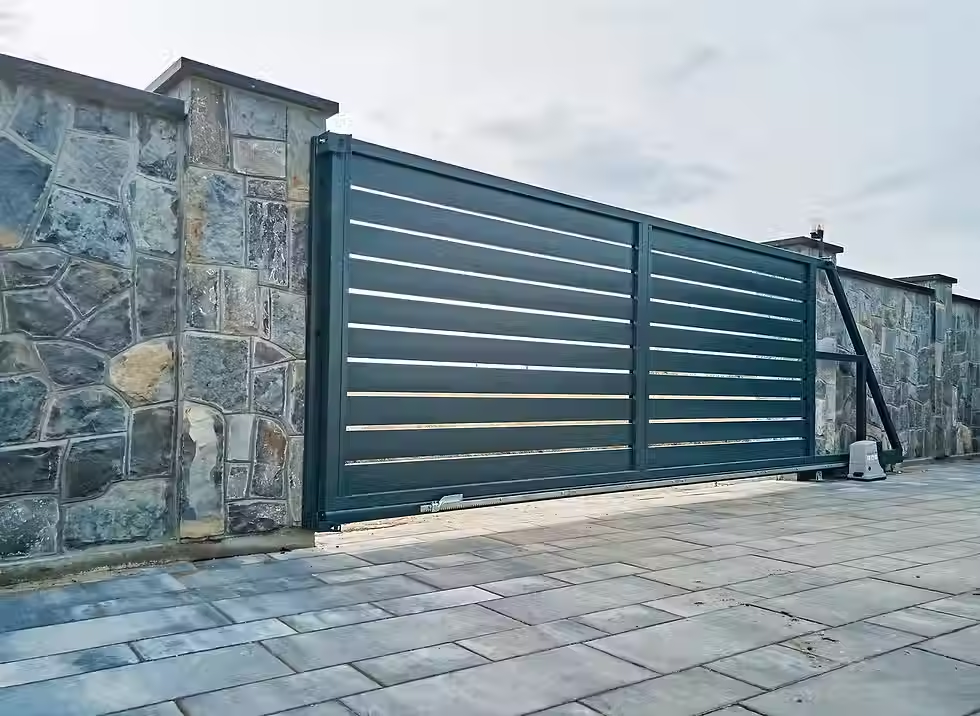
Do I Need Access Control with My Automatic Gates?

There’s no denying that there is a degree of satisfaction to arriving home and having your gates open unprompted. Especially, if it is a rainy day in miserable February and you’d have to otherwise leave your car.
No, here you simply turn onto the drive and hear the quiet mechanical hum of the gate beginning to move. A few seconds later, you are inside and the world is one step removed. It might seem small, but these small things have a way of building up to making everyday life that bit easier, or in some instances: safer.
Automatic gates are not a reinvention of the wheel, but they are designed to make entering and exiting your property (be it your home or your business) as convenient as possible, while still maintaining a secure physical boundary around it. Access controls take this one step further. Instead of simply doing away with the physical opening of the gate, it deems who can and cannot gain entry at all. The two systems work best when they go together, even if their jobs are slightly different.
So, when does access control make sense, and which type is right for your property? Let’s take a look at the various methods of remote access, and how they might differ when used for a private driveway, a large multi-building location, a shared property entrance or a high security Kent estate.
What does access control actually do?
In its most basic form, an automatic gate opens when someone presses a button or senses a car approaching. Access control stops and asks ‘who is trying to enter here?’ And that can mean a world of difference.
Access control is essentially about giving yourself the power to see who accesses your property, and the authority to accept or deny them. This might be by using a pin or fob that you provide, by answering an intercom, or in ever more technical iterations on the same basic idea. We even have apps for access now.
In some locations this can be a vital aspect of your security. A house at the end of a long private drive does not allow you the chance to see who is at the gate, but an intercom or camera control gives you the chance to find out. Likewise, a pincode or fob swatch will keep records for you of who was on site and when, if your location is set up in such a way that this information is important. That is access control in its simplest form. A little more knowledge, and a little more control, before the barrier opens.
What types of access control are available?

There are several ways to control access to an automatic gate. The right choice depends on the property, the number of people using it and how those people need to enter.
Keypads and PIN codes
A keypad will allow authorised users to enter a code before the gate opens, with the option for different codes for different people, or one pin number for everyone.
Keypads are a straightforward option for shared entrances, businesses and residential properties where several people need regular access, such as a shared carpark. Rather than carrying a physical key, users simply enter their code. Codes can also be changed when circumstances change, which can make them useful for properties where access needs to be managed over time.
Key fobs and proximity cards
Key fobs provide another simple method. Hold the fob near the reader and, if it has been authorised, the system allows entry. There is something pleasingly uncomplicated about it. A small movement, a click and the gates begin to move.
For businesses, apartment developments and managed properties, fobs can also provide a practical way to manage access for multiple users, depending on the system installed.
Remote controls
Remote controls remain one of the most familiar options for automatic gates, and for a private home, they may be all that is required. You turn into the drive, reach for the button and the gates open without you having to get out of the car. On a cold evening, with rain running down the windscreen and the prospect of standing outside in it, that convenience suddenly seems rather more significant.
Intercom systems
An intercom gives you another level of control because you can communicate with someone before allowing them through the security gate. This can be particularly useful where the entrance is some distance from the main building. A visitor arrives. The intercom sounds inside the house. You can ask who they are, why they are there and, if appropriate, open the gates.
For larger Kent properties with long driveways, this can make a practical difference. You do not have to walk down through the garden or across a gravel drive simply to find out who is waiting at the entrance.
Smartphone access
Technology is constantly evolving, and as with most things, access control can also be operated via an app on your smartphone. This can be especially useful when you need to authorise access from a remote location. It can also allow you to set temporary access for specific periods of time, such as to let in contractors for a day's work. For a busy business, that level of control and flexibility can be truly invaluable.
When does access control become worthwhile?
Not every home or business needs CCTV intercom access. For a small private driveway with two regular users, there may be little reason to introduce a complicated access control system. If both people have remote controls and the gate does exactly what they need, the arrangement is simple.
Things become more complicated when more people start using the entrance.
Perhaps you have a large house with regular deliveries. Maybe contractors arrive throughout the week to work on the grounds. Or a long driveway with no line of sight on the gate itself, or a residential development with one gate and dozens of households. You could give everyone a remote control.
But then there are the lost remotes. The old remotes that have never been returned. The visitor who needs access on Tuesday morning. The contractor who needs to get in for three hours and then disappear again. For this access control starts to make more sense, it actively fixes a practical issue - instead of being a gate that opens and closes, it becomes a managed entrance.
How can access control improve security?
A gate creates a physical boundary around a property. Access control helps determine who can cross it, something which is particularly important for properties where security is a priority.
A strong gate can provide an effective physical barrier to a driveway or site, but if anyone can operate it, there is less control over who enters. Access control adds another layer by restricting operation to authorised users, depending on the system installed.
It can also form part of a much wider perimeter security system. Gates, security fencing, CCTV, lighting and access control each have their own role. When they are designed to work together, they can create a much more considered approach to protecting a property.
Take a rural property out in the Kent Downs. It may have substantial fencing surrounding its boundary, with an automatic gate serving as a main entrance. It might be the first thing a visitor to the site encounters, so it needs to look as good as it performs, but that doesn’t mean it is a weak spot in the perimeter.
Our security gate systems work cohesively with security and perimeter fencing, as part of a wider security strategy, depending on the needs of each unique property.
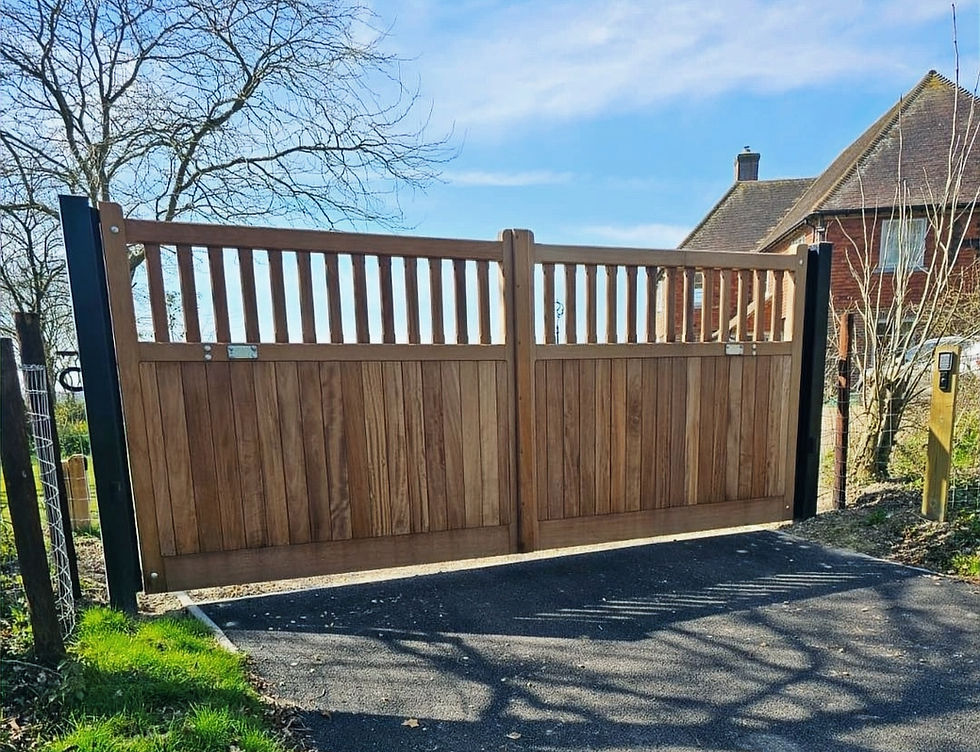
Access control is about convenience too
Security may be the first thing that comes to mind about access control, but in everyday life convenience can be equally important, especially on commercial or industrial sites. Staff may need regular access. Deliveries arrive at different times. Contractors might need entry for a single day. Visitors may need to be admitted without being given permanent access to the site.
A well-designed system can accommodate those different situations while keeping the entrance controlled. As such, good access control should become part of the background of the property. When everything is working properly, authorised people can get to where they need to go, without anyone else’s work having to stop to allow them access.
Can access control be added to an existing automatic gate?
In some cases, access control can be incorporated into an existing automatic electric gate system, although this will depend on the equipment already installed and the type of access control required. It is worth having the existing system assessed before choosing new equipment. The gate, automation, access control and other security measures all need to work together reliably.
If you are installing a new gate, access control can be considered from the beginning as part of the automatic gate installation. This gives you the opportunity to think about how the entrance will actually be used.
Where will visitors stop? Who needs access? How far is the gate from the main building? Will contractors need temporary access? Is the number of users likely to increase in the future, or at different times of the year? These practical details can be just as important as the technology itself, when it comes to deciding whether to upgrade your gate to retrofit access controls to what you already have in situ.
Don’t forget safety…
There is another part of automatic gate installation that deserves some attention: safety.
A powered gate might look simple from the outside. A pair of gates opens, closes and waits quietly at the end of the drive. Behind that movement, however, there is a combination of motors, controls, sensors and moving components that need to work together safely.
The Health and Safety Executive identifies several potential hazards associated with powered gates, including people being struck, trapped or crushed by moving parts. Hazards can occur around hinges, closing edges and areas where moving parts pass fixed structures.
This is one reason the access control system cannot really be considered in isolation from the gate itself. The way a gate is operated, the people who use it and the environment around it all form part of the safety picture. A gate at the entrance to a busy commercial site, for example, may have very different risks from one used by a small household on a private driveway. HSE guidance recommends that powered gates are considered individually through suitable risk assessment rather than relying on one standard solution.
Safety measures can include force limitation, protective edges and sensors designed to detect people or obstacles. The appropriate combination depends on the design and circumstances of the installation.
Maintenance matters too. Components can wear over time, while weather, debris and changes around the gate can affect how safely it operates. HSE recommends that powered gates are regularly checked and maintained by competent contractors.
For a homeowner, this might simply mean knowing that the gates at the end of the drive are being looked after properly. For a commercial property, residential development or estate, where many different people may encounter the gates, it becomes an even more important consideration.
Good automatic gate installation is therefore about considerably more than making the gates open at the touch of a button. The mechanism, access control and safety features all need to work together, quietly and reliably, every time someone approaches the entrance.
Access control for estates and larger Kent properties
Now, we may be biased, but no one can deny that Kent has a particularly varied landscape of properties.
There are homes tucked away along narrow country lanes, substantial rural estates behind long drives, residential developments around towns and busy commercial sites where vehicles are arriving throughout the day. Each property tells a different story about how its gates need to work.
An estate might have staff arriving before the household wakes, contractors coming and going during the week and deliveries appearing at the entrance without much warning. A residential development may have dozens of residents sharing a single access point. A commercial property might need employees to enter quickly each morning while keeping visitors and deliveries under control. Equally, there’s absolutely no reason for every one of these properties to have the same system: access control should reflect the way people actually use the site.
For larger properties and estates, access controls are just one part of your wider perimeter security measures.

Do I need access control with my automatic gates?
Perhaps you do. If your main goal is to open your gates without leaving your car, then a remote control fob is probably enough. There is definitely something to be said for keeping things simple if simple gets the job done.
However, if you have multiple users of your gate, provide temporary access to a variety of people, or you have a property with particular security concerns, then knowing who and when anyone has access can give you a considerable amount of control. The best system for you will depend on your needs, and there is no one answer for this.
Experienced automatic gate contractors such as PQF Assured can help by assessing the site, and devising a system that works with your current or planned security measures. The ideal is an access control system that fits naturally into your everyday life, improving your security without negatively affecting your routine.
If you are on the lookout of access control in Kent, or considering automatic gate installation for your home, your estate or your business, PQF Assured can help you consider all of the options out there, just get in touch to get the conversation started.